Noomiclone Controls: Every Key, Every Input, Every Mistake
The Four Keys and What Each One Changes
- Arch
- Left arrow, or the arch button drawn at the edge of the player. Opens the body out of the tuck, and it is the shape you hold on the bar between moves.
- Tuck
- Spacebar, or the tuck button. Folds the gymnast into the tightest shape available; in the air that tighter shape is how the rotation comes round sooner.
- Let go
- Up arrow, or the let-go button. Releases the bar and hands whatever momentum the swing had stored to the flight.
- Reset
- R. Returns to the beginning of the same attempt. The browser build has one scene, so reset never changes the map.
Same Four Actions, Two Surfaces
The key strip belongs to the player
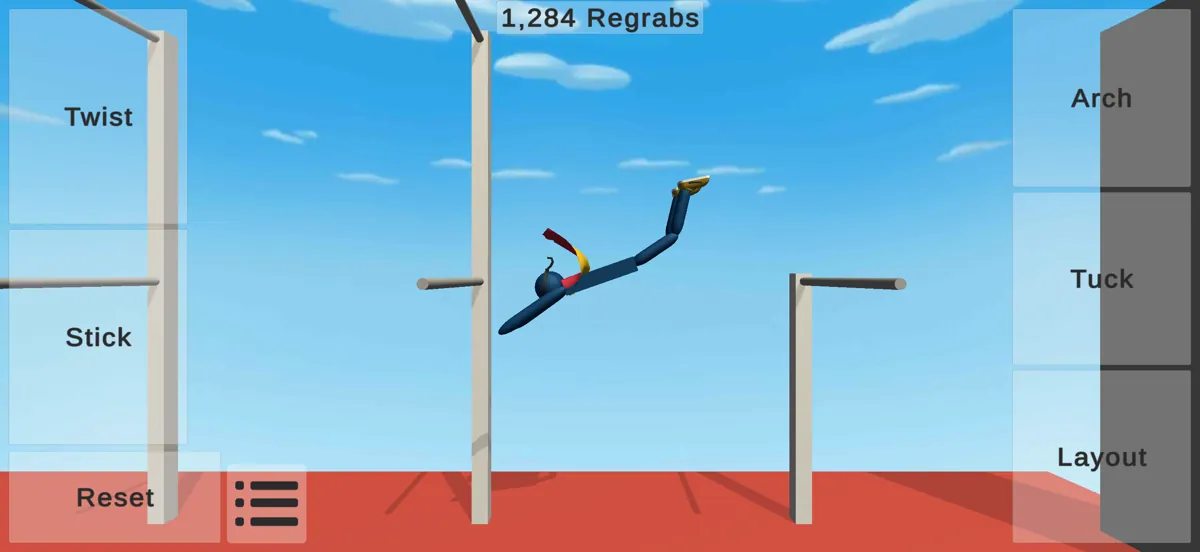
The browser build prints its four keys along the frame of the game itself, so the reference sits where you are already looking instead of in a manual.
The buttons do the same work
Those four actions are also drawn as large buttons at the edges of the frame, and a mouse click triggers them. A keyboard is convenient, not required.
Two sources, one list
The developer's itch page lists left arrow to arch, spacebar to tuck, up arrow to let go and R to reset. The key strip and that listing agree key for key.
Order is the whole grammar
Arch is held, tuck is a tap taken in the air, let go is the decision and reset is the undo. Nothing else is bound to anything.
Four Input Strings Worth Drilling
- 1
The plain swing
Hold the arch through the bottom of the swing, keep holding as the bar carries you up, and let go as the body passes the top. Every other string is built on this one. (Arch → Let go)
- 2
The short release
Arch through the swing, tap tuck at the top, then release. The tighter shape brings the rotation round sooner, which shortens the flight and drops the landing earlier. (Arch → Tuck → Let go)
- 3
The long release
Arch, release a beat later than feels comfortable, then tuck in the air to hold the rotation. Late releases travel further, and they are the ones that usually reach the next bar. (Arch → Let go → Tuck)
- 4
The recovery
A missed bar cannot be salvaged mid-flight. Reset, and treat the next attempt as a fresh swing rather than a continuation of the last one. (R)
Where the Release Window Sits
The gap between a release that reaches the next bar and one that falls short is small enough that itch.io players disagree about how hard the browser build is: one calls it very hard on PC, another finds it easier there. Both readings are honest. The window is measured in tens of milliseconds, and a player who is late on one attempt is usually early on the next.
Two things move that window. The first is the height of the swing: a bar that carries you higher gives the flight more time to travel. The second is the body: a tuck taken before the release shortens the arc and brings the landing back towards the bar you just left.
That is why the release is worth practising as a decision instead of a reflex. Watching the count at the top of the screen during a swing does not help; watching where the body is when the bar passes the top does.
Eight Mistakes and the Fix
Letting go at the bottom
The swing has stored nothing yet, so the flight is short and flat. Hold the arch until the bar carries the body past the top.
Tucking too early
The rotation arrives before the bar does and the gymnast rolls past it. Keep the arch longer, then tuck once the release is committed.
Tucking too late
The rotation arrives after the body has started to fall. Tuck at the top of the swing, not on the way down.
Holding the tuck through the catch
A folded body is harder to bring onto the bar. Open out towards it as the hands come round.
Pressing reset by reflex
R restarts from the opening, which throws away the height the swing had built. Use it when the attempt is actually over.
Fighting the swing
Releasing early because the bar feels fast loses the momentum that the swing was for. Let the bar do the work and spend the decision on the release.
Reading the counter mid-air
The regrab count is a record, not a steering wheel. It only moves when a catch lands, so it cannot tell you anything during the flight.
Copying a string without the height
A sequence that works after a long swing will not work from a short one. Match the string to the height you actually have.
Where to Go Next
Once the four keys are automatic, two pages carry the rest. The trick dictionary names the shapes the body can hold in the air and what each one does to the rotation; the map overview explains what the single browser scene contains and why it is not one of the twelve mobile maps.